



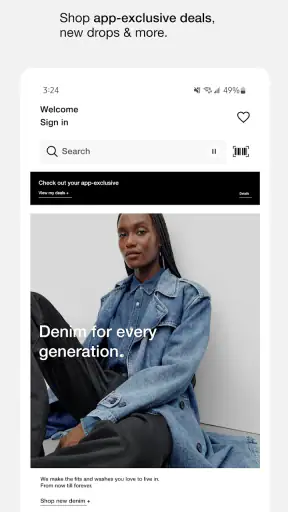
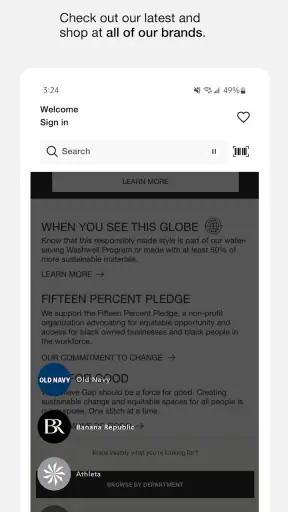
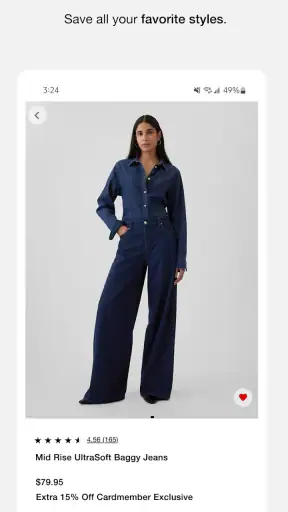
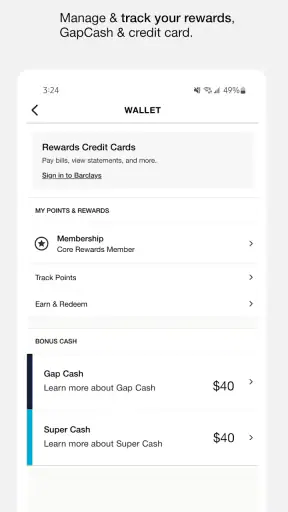
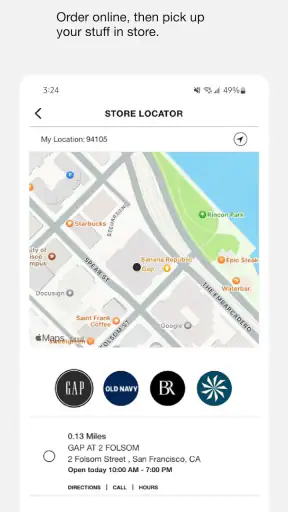
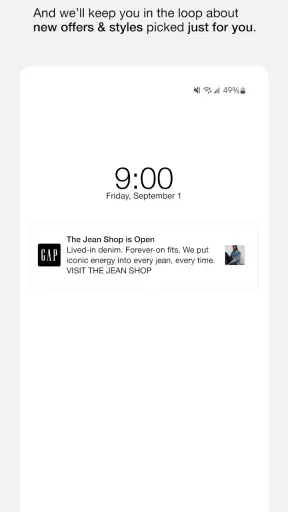
I spent time with Gap as a shopping app, looking at it less like a quick catalog and more like something a household might use when several people are choosing clothes together. That distinction matters. A single shopper can browse casually, but a shared phone or tablet changes the practical questions: who is signed in, whose preferences are being used, and whether one person is simply helping another find the right item. My overall impression is that the app is most useful when you already know the kind of Gap clothing you want and want a more focused way to explore it than visiting a general shopping marketplace.
Gap is free, aimed at everyone, and developed by Gap Official. It belongs squarely in the shopping category rather than trying to become a broad fashion social network or a general marketplace. The app has built a strong audience, with a 4.8 average from around 26 thousand ratings and more than a million installs. Those figures suggest that many people find the basic experience dependable, although popularity alone does not remove the need to check details carefully before ordering.
Using Gap on a shared household device
A realistic example is a parent and teenager sitting together on a sofa while looking for everyday clothes. One person may be searching for jeans, while the other is checking tops or seasonal basics. In that situation, the app works best as a visual starting point: browse together, compare styles, and pause before anything is added to a basket or account activity is changed. I would not treat a shared device as a private shopping space unless everyone using it understands whose account is active.
That is the first boundary I would establish. Before browsing seriously, I would check whether the app is signed in and whether the person holding the device is using their own account. This is especially important when a household shares one tablet. A child or guest can help choose clothing without needing to take over the account, while the account holder can remain responsible for the final review. Keeping that distinction clear avoids the common confusion of someone thinking they are only looking when their actions are actually connected to another shopper’s session.
The app’s focused design is helpful here. Because the experience is centered on Gap’s own range, there are fewer unrelated sellers and distractions than on a large marketplace. That makes it easier to give a young shopper a limited task, such as comparing two styles or finding a particular type of clothing. The trade-off is that you are browsing one brand’s selection, so this is not the right tool when the household wants to compare many labels, hunt across resale listings, or find the lowest price from several retailers at once.
I also found that shared browsing benefits from a simple verbal routine: decide who is searching, who is checking the details, and who has final say. That may sound obvious, but it prevents a casual browsing session from becoming an accidental order review. I would treat the basket as a checkpoint rather than assuming that every household member understands what has been selected. The app can support the discovery part of the conversation, but the family still needs its own agreement about purchases.
Setting up clear account boundaries
For personal use, I would begin by making sure the right household member is using the right account. If one person uses the app for their own wardrobe and another occasionally borrows the device, switching attention between those roles can create avoidable confusion. I would avoid leaving the app open on a shared screen when the session contains personal shopping activity, especially if another person may continue browsing later.
The important point is not to assume that a shared device creates separate experiences automatically. A phone or tablet can be physically shared while the shopping context remains personal. If a teenager is helping select school clothes, I would let them browse alongside me, but I would keep the final account check with the person who is actually responsible for the purchase. That arrangement gives the younger shopper freedom to express preferences without blurring responsibility.
Gap is a better fit for this kind of guided shopping than for a completely open-ended household catalog. The brand focus gives the session a manageable scope, particularly when someone already has an idea of the desired style. On the other hand, shoppers who need extensive filtering across brands may find the experience limiting. A large multi-brand retailer or a comparison service is more suitable when budget, material, fit, and availability must be weighed across many different sources.
Another useful habit is to separate “inspiration” from “decision.” During the first pass, I would simply collect ideas and discuss what looks appropriate. During the second pass, I would inspect the item information and make sure the selection still suits the intended wearer. This two-stage approach is more effective on a shared device because it stops a younger or less experienced shopper from feeling that every tap is already a commitment.
Coordinating clothing choices without taking over
One of the app’s strengths in a household setting is that it gives people something concrete to discuss. Instead of describing a garment from memory, two shoppers can look at the same screen and talk about color, shape, and how the item might fit into an existing wardrobe. I found that particularly useful when one person had a clear preference and another was trying to keep the overall selection practical.
I would use the app for coordination in small, defined tasks. For example, one person can search for everyday tops while another checks whether the chosen pieces work with clothing already owned. A parent can also ask a child to identify a few favorites, then review those choices together. This keeps the child involved without turning the session into unsupervised purchasing. It also makes the app feel more like a shared planning tool than a solitary catalog.
There is a subtle trade-off between convenience and consistency. A brand-focused app can make it easier to build a coordinated set from one retailer, but that does not guarantee that every choice will suit the wearer or the household budget. I would resist the temptation to treat a matching look as a reason to buy more than planned. The app is useful for narrowing options; it should not replace a clothing list or a spending limit agreed on before browsing.
When several people are involved, I recommend saying the intended use out loud before searching. “We need an everyday layer,” “we are replacing worn basics,” or “we are only collecting ideas” leads to very different browsing behavior. This is one of the more valuable ways to use the app: its visual shopping flow can quickly generate choices, but a clear purpose prevents the session from drifting into unnecessary browsing.
I would also keep the final review calm and separate from the excitement of discovery. Once everyone has chosen favorites, the account holder should look again at the selections and confirm that each item belongs to the intended person. That pause is especially useful on a shared screen, where one household member may assume that another person’s choice has already been approved.
Age, trust, and everyday supervision
The Everyone age context makes the app approachable for households with children and teenagers, but I would not interpret that as a reason to remove adult judgment from shopping. Clothing choices can involve personal information, household spending, and account activity even when the content itself is ordinary. A younger user may be perfectly capable of comparing styles while still needing an adult to handle the final purchasing step.
In my view, trust works best when it is explained rather than assumed. I would tell a child what they are allowed to do: browse, compare, and identify favorites, for example. I would also explain what requires permission, such as moving from selection to a final order review. This creates a clear boundary without making the app feel forbidden or overly complicated.
The app is therefore a good choice for guided family shopping, but less suitable as an unrestricted browsing tool for a child using a parent’s logged-in device. That is not a criticism of the clothing catalog itself. It is simply a reminder that an app designed for shopping still sits inside a household’s own rules about accounts and spending. The safest experience comes from matching access to the child’s maturity and the device’s setup.
For teenagers, the balance can be more collaborative. I would let them lead the style discussion and explain why a particular item works, while keeping the adult role focused on practical checks. This approach respects their independence and makes the app useful for learning how to plan a wardrobe. It also avoids the opposite problem, where an adult chooses everything and the young shopper learns nothing about evaluating clothing.
For younger children, shorter sessions are better. I would browse with a specific goal and stop once that goal is met. The app’s brand-specific scope helps make that possible, since the child is not moving through an endless collection of unrelated sellers. Still, I would keep the device in view and avoid treating shared access as a substitute for supervision.
What the app does well for individual shoppers
When I use Gap alone, the main advantage is focus. I can stay within the brand’s style language instead of sorting through a marketplace where product photography, sizing conventions, and seller standards may vary from one listing to another. That consistency makes the app appealing to someone who already knows they like Gap and wants a direct route to its latest clothing selection.
The app also makes sense for repeat shoppers who have a familiar idea of what they want. If I am replacing a basic item or looking for a recognizable Gap style, a dedicated app feels less cluttered than starting with a web search. The concentrated catalog can reduce the time spent filtering out unrelated results, and it gives a household a shared reference point when discussing possible purchases.
Its free price also lowers the barrier to trying it. I can install it, browse, and decide whether the brand’s selection suits my needs without paying for access to the shopping experience. The current version is 18.5.0 and requires at least iOS 11, so compatibility is worth checking before planning a shared-device session. For a household with an older device, that operating-system requirement may be the deciding practical detail.
At the same time, the app should not be mistaken for a universal wardrobe planner. I would choose it when the brand itself is part of the decision. If I need specialist outdoor clothing, a broad size comparison, secondhand options, or a precise cross-store price check, I would use a different shopping route. Gap’s strength is direct brand browsing, not covering every possible clothing source.
Where the experience can create friction
The biggest limitation is the same thing that makes the app focused: it centers one retailer. A household with different tastes may quickly reach the edge of what the app can offer. One person may want Gap’s casual basics while another needs something from a different label or a different type of retailer. In that case, the app can still help one member of the family, but it cannot serve as the household’s complete clothing solution.
Shared-device use adds another layer of friction. A browsing session can feel communal, while the account behind it remains individual. If users do not pause to identify the active shopping context, the convenience of handing over a phone can become confusing. I would rather spend a few seconds clarifying who is signed in than assume that every household member is seeing a neutral, temporary session.
There is also a practical difference between liking an item on screen and knowing it is right for the wearer. Photos can help with style conversations, but they do not replace careful thought about fit, comfort, existing clothes, or how often the item will be used. I would use the app to narrow choices, then make the final decision with the wearer’s needs in mind. This matters even more when an adult is shopping on behalf of a child.
Another limitation is behavioral rather than technical: a polished shopping flow can encourage browsing beyond the original purpose. I found that the best defense is to begin with a short list and a clear stopping point. Without that discipline, a household session can move from replacing one needed item to considering several attractive extras. The app is not necessarily doing anything wrong; the risk comes from treating convenient discovery as a shopping plan.
Who should use it and who should choose something else
I would recommend Gap to an individual or household that already enjoys the brand, wants a dedicated way to browse its clothing, and values a focused catalog over a multi-retailer search. It is particularly useful for a parent and child who want to compare styles together while keeping the adult responsible for the account and final purchase decision. The Everyone age context makes shared discussion comfortable, provided the household still sets sensible boundaries.
I would be more cautious about recommending it to someone who wants the widest possible selection or the strongest price comparison. A general marketplace is better for checking several brands at once. A resale service is better for secondhand hunting. A specialist retailer may be better for technical clothing or a very specific fit requirement. Choosing Gap makes the most sense when brand familiarity and a direct shopping experience matter more than exhaustive comparison.
The app’s audience size supports its role as an established shopping destination: it has passed one million installs and carries around one thousand two hundred written reviews. I would view those figures as signs of reach rather than a guarantee that every household will find the same experience ideal. Personal preferences, device age, account habits, and the need for multi-brand comparison still matter more than popularity.
My household verdict
After using Gap with shared-device habits in mind, I see it as a practical brand-shopping app rather than a complete family wardrobe system. Its best use is structured browsing: decide what is needed, let the intended wearer participate, keep account responsibility clear, and review choices before moving forward. That workflow makes the app more useful than simply handing a phone around and hoping everyone understands the boundaries.
The most important habit is to separate shared browsing from personal account activity. Once that is clear, the app can support real household coordination without pretending that every user has the same authority or needs. A parent can guide a younger shopper, a teenager can contribute meaningful style choices, and an individual can browse independently when privacy and convenience are more important.
Gap is free, openly accessible to an Everyone audience, and maintained by Gap Official, with a current version of 18.5.0 for devices meeting its iOS 11 minimum. I would install it if the household already shops with Gap or wants a simple place to explore the brand together. I would skip it as a primary shopping tool if the goal is to compare many retailers, manage a broad family wardrobe across brands, or let several people use one device without clearly separating their shopping roles.
My final recommendation is positive but specific: use it as a focused, supervised way to discover Gap clothing and coordinate choices, not as an automatic substitute for household planning. With a clear account boundary and a deliberate final check, it fits shared shopping surprisingly well. Without those habits, the same convenience can make a personal shopping session look more communal than it really is.


